
Stock Sanat Specialized Magazine

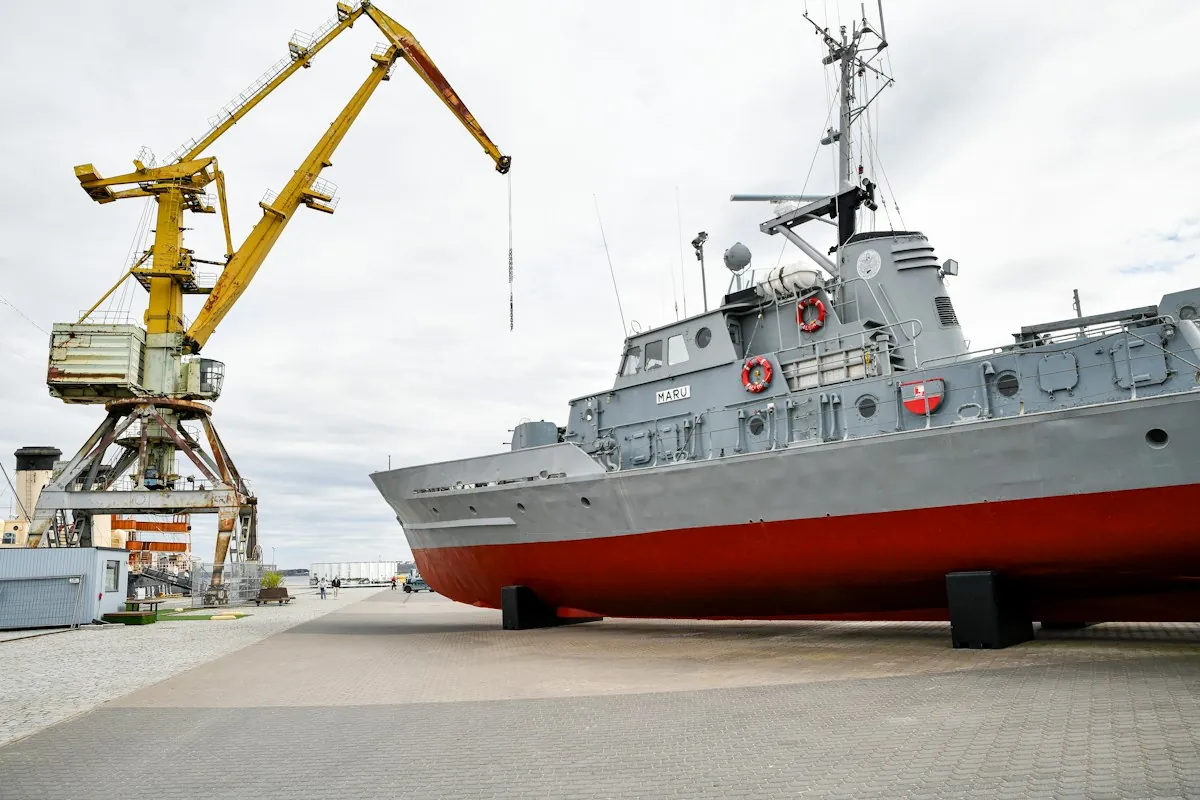
A hull is the largest coated surface on any vessel, and it works in the harshest place: constant water, salt, sun and moving parts. Owners and yard managers keep asking the same thing: how often to repaint a ship hull without wasting money or risking fouling and corrosion.
The honest answer is that it depends on several factors. In this guide we explain what drives the interval, how dry-dock cycles work, and how hull maintenance, hull cleaning and the right coating system fit together. It is written for shipyards, boat builders, contractors and industrial buyers.
Table of Contents
How Often to Repaint a Ship Hull: The Short Answer
There is no universal number. Most deep-sea merchant ships get a new underwater coating system at planned dry-dockings, and those dockings are usually spaced by class and flag rules, not by paint alone. In practice, the interval is often somewhere between two and a half and five years, and it moves up or down with the factors below.
Notice the wording: often and somewhere between. A fixed promise would be misleading. A slow tanker in cold water and a fast ferry in a tropical port can use the same paint and need very different timing.
Treat the paint maker’s data sheet as the upper limit, your own inspection data as the real answer, and the dry-dock date as the moment you act on both.
The same logic applies to boats and workboats. If you ask how often to repaint a ship hull on a small vessel, the answer still comes from usage, water and coating condition, not from the calendar.
What “Repainting” Actually Means for a Hull
Before you decide how often to repaint a ship hull, separate three different jobs. People often mix them up, and that is why plans fail.
- Antifouling renewal. A fresh top coat that controls marine growth. This is the most frequent job.
- Spot repair. Local blasting and recoating of damaged or rusted areas, such as scrapes, welds and anchor chain contact zones.
- Full system renewal. Blasting to a high standard and applying primer, anticorrosive coats and antifouling again.
Hull cleaning is a fourth activity. It keeps a good coating working, but it does not replace any of the three jobs above.
Underwater hull versus topsides and boot-top
Different parts of the ship age at different speeds. The underwater area faces fouling and abrasion. The boot-top is wet and dry in turns. The topsides take sun, spray and mechanical damage from fenders and lines. Plan each zone on its own.
Dry-Dock Cycles and Survey Rules
Dry-docking is expensive, so the question of how often to repaint a ship hull is really a question about dock dates. Taking a ship out of service, booking a yard and paying for blasting, staging and paint is a major cost, so owners plan around it. Class societies commonly require the underwater hull to be surveyed twice in a five-year period, with a limit on the gap between surveys. Some ships can use an approved in-water survey for part of this cycle.
Rules differ by class society, ship type and flag, so always confirm your own survey schedule with the class surveyor. The point for paint planning is simple: the dry-dock date is when most big coating decisions are made. A coating system that is meant to last the whole cycle needs enough film thickness and the right antifouling at that moment.
For wider background on fouling, see the IMO biofouling guidance. It explains why controlling growth on hulls matters for efficiency and for moving species between ports.
A typical dry-dock painting sequence
- Wash the hull with fresh water at high pressure and remove fouling.
- Inspect the coating and measure remaining film thickness.
- Mark damaged and rusted areas for repair.
- Blast or abrade to the specified surface standard.
- Apply anticorrosive primer or the repair coats and let them cure.
- Apply tie coat if the system needs it, then the antifouling coats.
- Check film thickness and records, then float the ship within the paint’s allowed recoating and immersion window.
Five Factors That Set Your Repaint Interval
Ask five questions about your ship. Their answers will tell you more about how often to repaint a ship hull than any average figure.
1. Antifouling type
Different antifouling technologies release or behave differently in water. Some wear away in a controlled way, others leave a hard surface and rely on cleaning, and others use a slick surface. Each one changes how often to repaint a ship hull, with a different service life and a different best use. We compare them in the next section.
2. Service speed and activity
Ships that sail fast and often keep fouling off with flow across the hull. Many coatings are designed with this in mind. A vessel that moves slowly, makes short trips or often stops in port is more exposed, so how often to repaint a ship hull is shorter for it.
3. Idle time and lay-ups
Idle time is the factor most often underestimated when deciding how often to repaint a ship hull. A hull sitting still in warm, nutrient-rich water gets colonised quickly. Long lay-ups can shorten the real life of an antifouling system, even if the ship is brand new out of the yard.
4. Water temperature, salinity and region
Warm, productive water grows fouling faster than cold water. Ports with river outflow, low salinity or heavy traffic bring their own challenges. A route that crosses several water types has to be planned for the hardest area it visits.
5. Hull condition and surface preparation
A coating is only as good as what is under it, and that affects how often to repaint a ship hull. Poor preparation, thin film, damaged primer or old paint that does not match the new system will shorten life more than any other mistake. Good prep and correct film thickness are the cheapest ways to extend the interval.
| Factor | Pushes the interval shorter | Pushes the interval longer |
|---|---|---|
| Antifouling type | Wrong type for the ship’s profile | Type matched to speed and activity |
| Service speed | Slow, short trips, frequent port stops | Steady, fast operation |
| Idle time | Long lay-ups in warm water | Short, rare idle periods |
| Water | Warm, nutrient-rich, high fouling pressure | Cold, clean, low fouling pressure |
| Surface and film | Poor prep, thin film, damaged primer | Good prep, correct film thickness, sound primer |
Antifouling Type and How Often to Repaint a Ship Hull
The antifouling coat is usually the part that answers how often to repaint a ship hull below the waterline for the underwater hull. The main families are listed below. Specifications and service life vary by product, so use the manufacturer’s data for your exact grade.
| Coating family | How it works | Typical planning note |
|---|---|---|
| Self-polishing | The film wears away slowly and exposes fresh biocide | Wear rate depends on speed and activity; check thickness at each docking |
| Controlled depletion | Biocide leaches out of a matrix that stays in place | Often used where moderate activity is expected; surface may need cleaning |
| Hard (contact leaching) | Rigid film releases biocide while it erodes slowly | Often suited to boats and workboats; follow overcoating rules |
| Foul-release | Slick surface makes it harder for growth to stick | Works best with regular movement; needs careful application and handling |
Most owners choose the system together with the yard and the coating supplier, based on the ship’s trading pattern. For product ranges and technical help, you can browse our Marine Paint product category or read our guide to the marine coating system.
Repainting schedule
Planning your next hull repaint?
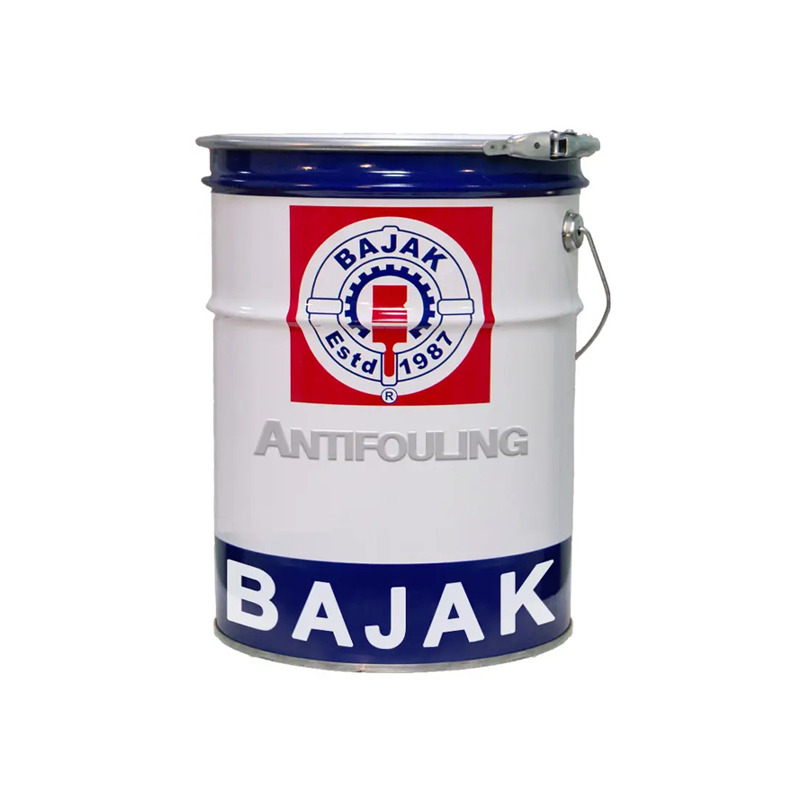
Get Bajak antifouling and marine coatings for your next docking. Share your vessel details for a tailored quotation.
Hull Cleaning and How Often to Repaint a Ship Hull
Hull cleaning is the main way to keep fouling under control between dockings. It can be done by divers or crawlers in the water, or by pressure washing at the dock. It is part of good hull maintenance, but it comes with trade-offs.
- Good: it removes slime and early fouling, which restores smoothness and efficiency.
- Careful: harsh tools can damage soft coatings and shorten their life.
- Rules: many ports restrict in-water cleaning, especially where fouling is heavy or the paint releases biocide. Confirm local rules first.
- Records: note dates, method and findings so the next dry-dock team can see how the coating behaved.
Cleaning can stretch how often to repaint a ship hull, because it extends the useful life of a healthy coating. It cannot revive one that is worn out or damaged, and it does not remove the need to repaint at the planned dry-dock.
Signs a Hull Needs Repainting Earlier
Planned schedules are a starting point for how often to repaint a ship hull. Condition should be able to pull a repaint forward. Watch for these signs during inspections and diver reports, because they can change how often to repaint a ship hull for a particular vessel.
- Fouling that returns quickly after cleaning.
- Rising fuel use or lower speed for the same engine power, once other causes are ruled out.
- Rust spots, blistering, flaking or visible bare steel.
- Film thickness that has dropped under the system’s minimum.
- Large paint damage from groundings, ice, fenders or mooring contact.
- A long lay-up before the next planned dry-dock.
None of these alone means the whole hull needs full renewal. Together with thickness readings, they help you decide between a local repair, a new antifouling coat or a bigger scope.
How to Plan the Dry-Dock Painting Scope
The best answer to how often to repaint a ship hull is a plan made months ahead. Start with data: previous docking records, inspection reports, diver surveys and thickness readings.
Choose the scope tier
The scope you pick at each docking also changes how often to repaint a ship hull next time, so choose it with the next interval in mind.
| Scope | When it fits | What it involves |
|---|---|---|
| Spot repair and antifouling | Sound system with local damage | Wash, repair damaged spots, new antifouling coat |
| Sweep blast and recoat | Aged antifouling over sound anticorrosive | Light blast, touch-up of the primer, new antifouling |
| Full blast and new system | Widespread breakdown or rust | Blast to standard, full anticorrosive and antifouling system |
Lock in supply and technical details early
Order paint ahead of the yard slot. Confirm quantities, thinners, colours, overcoating intervals and application conditions with your supplier. Delays in material can cost more than the paint itself, because the dry-dock day rate keeps running.
Ask for the technical data sheet and safety data sheet for each product. Check that the new coating is compatible with what is already on the hull.
The Cost of Getting How Often to Repaint a Ship Hull Wrong
Getting how often to repaint a ship hull wrong costs money both ways. Repainting too early wastes yard time and material. Repainting too late is often more expensive, because fouling increases drag and fuel use, and damaged areas can expose steel to corrosion. Once corrosion starts, you need heavier surface preparation and more coats.
The aim is not to stretch how often to repaint a ship hull as far as possible, nor to repaint on a fixed date. The aim is to repaint when the data says the coating system has delivered what it was bought for.
A good repaint interval is a decision based on inspection records, not a number copied from another ship.
Choosing a Coating System for Your Fleet
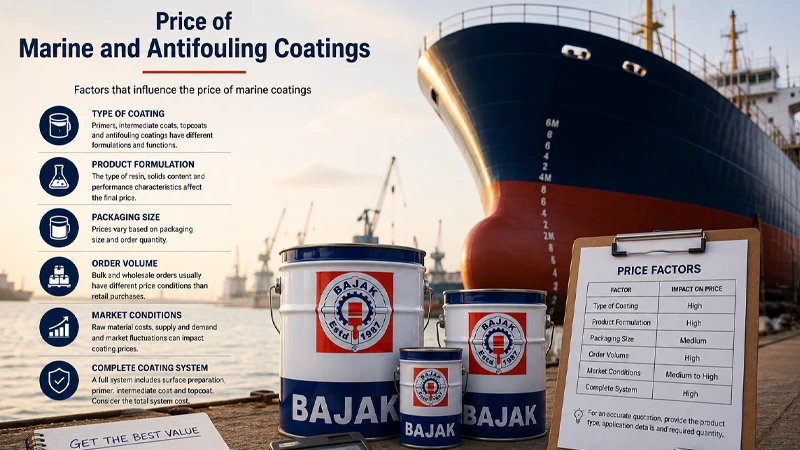
Stock Sanat supplies Bajak industrial and marine coatings to shipyards, boat builders, contractors and industrial buyers. We do not promise a fixed lifetime for any product, because real service life depends on the factors above, and those factors decide how often to repaint a ship hull in practice. We do help you match a system to your vessel, trading pattern and dry-dock plan.
- For underwater hulls, start with Bajak Antifouling Paint.
- For the full range of coatings for ships and boats, browse the Marine Paint product category.
- For selection criteria and buying advice, read how antifouling paint works and how a marine coating system is built up layer by layer.
Frequently Asked Questions About Hull Repainting
How often should a ship hull be repainted?
There is no single number. Most merchant ships repaint the underwater hull at scheduled dry-dockings, commonly every 30 to 60 months depending on class rules, the antifouling system, trading pattern and hull condition. Always follow the coating maker’s technical data sheet and your class society’s survey rules.
How long does marine paint last on a hull?
It depends on the coating type, film thickness, surface preparation, ship speed, idle time and water conditions. Antifouling is designed for a stated service life on the technical data sheet. Real life can be shorter on slow, idle or warm-water ships and longer on busy, well-maintained ones.
Does hull cleaning replace repainting?
No. Hull cleaning removes fouling and slime and helps the coating keep working, but it does not rebuild worn film or repair damage. Aggressive cleaning can even wear the coating faster. Use it as part of a hull maintenance plan, then repaint at the planned dry-dock.
What happens if a ship hull is repainted too late?
Fouling builds up, drag and fuel use rise, and bare steel can start to corrode. Repairs then need heavier blasting and more coats. This often costs more at the dry-dock than a planned repaint would have. Regular inspection helps you catch problems earlier.
Do idle or slow-moving ships need repainting more often?
Often yes. Fouling settles faster when a hull sits still, and many antifouling coatings work best when the ship is moving and the water flows over the film. If your vessel lays up for long periods, tell your coating supplier so the system and dry-dock plan can match.
Is a full repaint always needed at every dry-dock?
No. Many yards do spot repairs, sweep blasting and a new antifouling coat when the system under it is sound. A full blast and complete new system is used when the old coating is failing broadly. Thickness readings and a hull survey decide the scope.
Can I repaint a hull myself between dry-dockings?
Small boats can be repainted when hauled out, but large ships need a dry-dock or an approved in-water method. Local rules on in-water cleaning and paint discharge can apply. Check with the port authority, class society and coating supplier before you start.
Conclusion and Next Step
The right answer to how often to repaint a ship hull comes from four things: your dry-dock cycle, the antifouling system, how the ship is used, and what inspections show. Plan around those, keep good records of how often to repaint a ship hull on each vessel, and use hull cleaning to support the coating, not to replace it.
Planning a dry-dock or a fleet repaint and not sure which Bajak system fits? Send us the vessel type, trading pattern and last docking records. You can contact the Stock Sanat team for technical advice and a quotation.
Recent Posts