
Stock Sanat Specialized Magazine

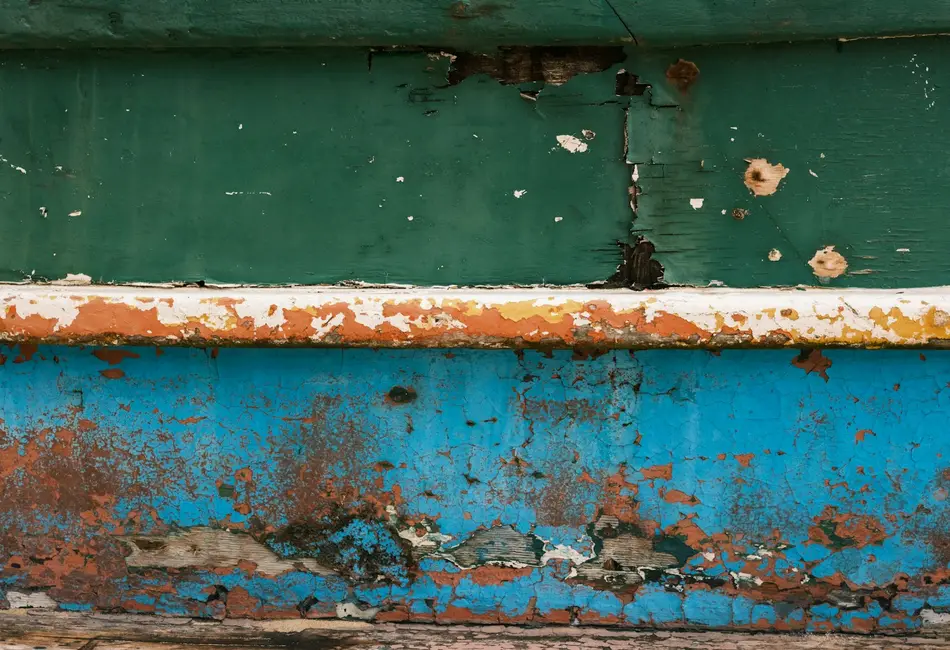
Marine paint peeling is the failure that shows first and costs most. Flakes lift off the hull, blisters appear below the waterline and rust stains run through a fresh topcoat. Each defect points to a cause, and repainting without finding it only repeats the problem.
This troubleshooting guide matches every common defect to its likely cause and fix. It is written for shipyards, boat builders, contractors and industrial buyers who need a clear checklist before they respecify or recoat.
Table of Contents
Quick Guide: Matching the Defect to the Cause
Start with what you can see on the hull. The table below links each symptom to the most likely causes and the first check to make.
| Symptom | Likely cause | First check |
|---|---|---|
| Coating lifts off down to bare steel | Poor surface preparation, oil, salts or rust under the primer | Inspect the back of a flake for rust, oil or dust |
| Top coat peels off the coat below | Missed recoat window or incompatible paint | Review the data sheet recoat interval and system list |
| Small water-filled blisters | Soluble salts or moisture trapped under the film | Burst one blister and test the liquid and the steel for salts |
| Rust spots or streaks through paint | Thin film on edges and welds, pinholes or damage | Measure dry film thickness near the stain |
| Chalky, faded surface that flakes | Ultraviolet breakdown of an unsuitable topcoat | Rub the surface and check for powder on a cloth |
Cut a small sample out of the damaged area if the owner allows it, because marine paint peeling rarely has a single cause. Where the paint separates is the strongest clue, and the next section explains how to read it.
How to Read a Marine Paint Peeling Failure
Look at the layer that is exposed after the paint lifts. The break line tells you which step of the process went wrong.
- Peeling to bare steel: the primer never bonded. Suspect contamination, a smooth surface or rust left behind.
- Peeling between coats: the intercoat bond failed. Suspect a recoat window problem, chalking or a contaminated cured coat.
- Peeling at the topcoat only: suspect weathering, an unsuitable topcoat or a poorly cured film.
- Cohesive failure inside one coat: suspect wrong mixing, over-thinning or a very thick film.
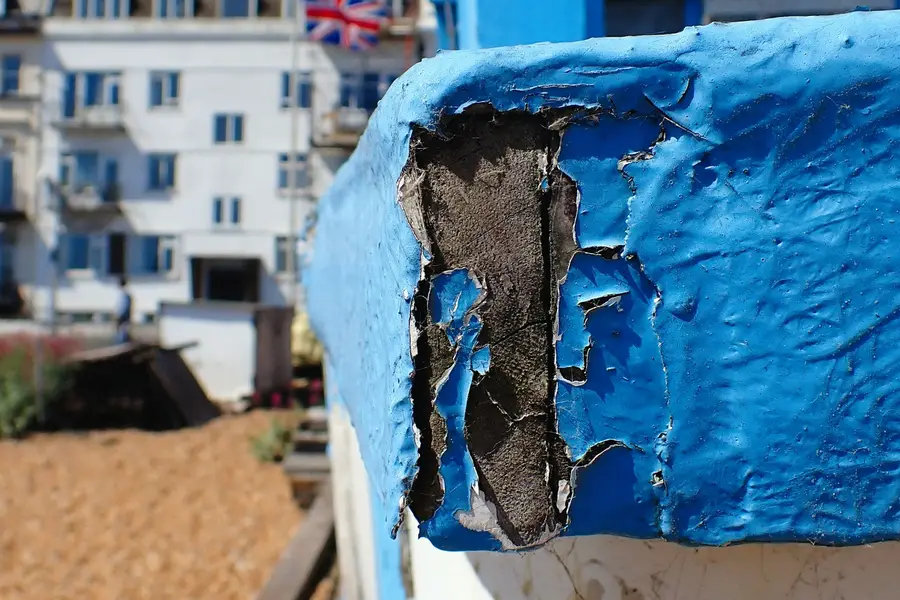
8 Causes of Marine Paint Peeling and How to Fix Them
1. Poor Surface Preparation
This is the most common of the hull paint failure causes behind marine paint peeling. Paint grips a clean, profiled surface. It does not grip oil, grease, dust, old rust or mill scale.
Fix: degrease first, then blast or mechanically clean to the grade in your specification, usually Sa 2½ for immersion zones. Remove dust before painting and prime within the time the data sheet allows.
2. Soluble Salt Contamination
Salts from sea spray, handling or contaminated abrasive stay on the steel even after blasting. Under paint they pull water through the film and start osmotic blistering, which later shows up as marine paint peeling. Rust follows soon after.
Fix: test the blasted surface for soluble salts, wash with fresh water where needed and retest. Ballast tank rules in the IMO PSPC set a limit of 50 mg/m². Your project may set another limit, so follow your specification.
3. Moisture and Wrong Weather Conditions
Paint applied on damp steel or in high humidity traps moisture and invites marine paint peeling. Steel that falls below the dew point forms an invisible film of water within minutes.
Fix: record air temperature, steel temperature, relative humidity and dew point before every coat. Keep the steel at least 3°C above the dew point, and use dehumidification or heating in enclosed spaces.
4. Missed Recoat Intervals
Epoxy coatings cure hard. If the next coat goes on after the maximum recoat time, it cannot bond chemically, and marine paint peeling between coats follows. If it goes on too early, solvent can be trapped.
Fix: work to the minimum and maximum intervals in the data sheet. If the maximum has passed, sweep or abrade the surface as the paint maker directs before recoating.
5. Incompatible Paint Systems
Not every primer, intermediate coat, topcoat and antifouling works together. Putting an antifouling or alkyd over an unsuitable coat, or switching brands without checking, can cause lifting or wrinkling.
Fix: keep to one tested system per area to avoid marine paint peeling. Ask the supplier for a compatibility statement. Our range of Marine Paint in Iran lists the primers, intermediate coats and topcoats you can match as one system.
6. Wrong Mixing, Pot Life or Film Thickness
Two-pack paints need the right ratio and thorough mixing. Paint used after its pot life, or thinned too much, does not cure correctly. Films that are too thick can crack or trap solvent. Films that are too thin leave rust paths.
Fix: mix by the data sheet, note batch numbers and measure wet and dry film thickness during the job.
7. Thin Film on Edges, Welds and Damage
Paint pulls away from sharp edges and leaves a thin film. Welds, bolts and corners are the first places where corrosion starts, and it is also where rust bleeding through paint is usually seen first.
Fix: grind sharp edges, apply stripe coats between full coats and repair scratches quickly before water reaches the steel.
8. Wrong Paint for the Exposure Zone
A coating suited to a tank interior may chalk and fade on a sunlit topside. An above-water system may soften when immersed. Each zone of the vessel has its own demands, and a mismatch often ends in marine paint peeling.
Fix: choose systems by zone: immersion, splash, topsides, deck and interior. The marine paint standards covers the environment categories used in specifications. For two-coat protective work on steel, a product such as Bajak Epoxy Polyamide Coating is typically considered.
Coating failures
Dealing with peeling marine paint?
Tell us what happened and we will recommend a Bajak marine paint system for your repair.
Paint Blistering on Hull: Osmotic and Solvent Blisters
Paint blistering on hull surfaces comes in two main forms. Both are caused by a pocket of liquid under the film.
- Osmotic blistering: salts or other soluble material under the coating draw water through the film. The blister contains a liquid and often looks cloudy or slightly acidic.
- Solvent blistering: solvent is trapped in a thick or fast-drying film and expands as it warms in the sun.
- Moisture blistering: damp or condensation under the paint turns to vapour and lifts the coating.
Burst a blister and look at the steel. A clean, bright surface with liquid points to moisture or salts. Rust under the blister points to contamination or damage. Report your findings with photographs.
Repair: remove the blistered area back to sound paint, clean and test for salts, then rebuild the system. Do not just paint over the blisters, because blistering and marine paint peeling will return.
Rust Bleeding Through Paint
Brown stains running through a good topcoat mean corrosion is active. Do not wash them off and ignore them. Rust that bleeds through paint often starts at welds, edges, fittings and chipped areas, or where rust was left under the first coat.
- Mark the affected areas and measure the paint thickness around them.
- Remove the coating over the stain and about 25 mm beyond it, down to sound paint.
- Clean the steel to the specified grade and test for salts.
- Apply a suitable primer, then the remaining coats of the system, with a stripe coat on edges.
Key point: Rust that returns in the same spot after repainting means the cause was not removed. Check for salts and film thickness before you repaint again.
Repair Steps for a Failed Marine Coating
- Record the defect, location and photographs.
- Find the cause using the break line and the checks above.
- Remove loose or defective paint until you reach sound, well-bonded coating.
- Clean, degrease and prepare the steel to the specified grade.
- Test for soluble salts and measure the conditions again.
- Spot-prime bare steel and apply the full system to the required thickness.
- Inspect, record and give the repair the full cure time before returning the vessel to service.
For planning, see our guide on how often a ship hull should be repainted.
How to Prevent Marine Paint Peeling on New Work
Preventing marine paint peeling costs far less than repair. A disciplined process protects the coating from the first day.
- Write a specification that names the system, thickness and recoat intervals.
- Inspect the surface before painting, not after.
- Control humidity and dew point, and stop work when conditions are wrong.
- Apply stripe coats on edges, welds and corners.
- Keep batch records and thickness readings for every coat.
Many of these checks come from recognised marine paint standards such as ISO 12944. If you work with antifouling, read the IMO anti-fouling page for rules on controlled substances.
Marine Paint Peeling FAQ
What causes marine paint peeling?
Marine paint peeling is most often caused by poor adhesion. Typical reasons are oil, salt or rust left on the steel, painting in damp conditions, missing the recoat window, or using incompatible coats. Wrong film thickness and mechanical damage also play a part. Surface preparation is the first thing to check.
Why does paint blister on a boat hull?
Blisters form when water or solvent is trapped under the film. Salt left on the surface draws water through the coating by osmosis, and the liquid builds pressure underneath. Painting over damp steel, or applying thick coats that trap solvent, produces similar blisters.
Why is rust bleeding through my marine paint?
Rust bleeding means corrosion is active beneath or through the film. Common causes are thin paint on edges and welds, pinholes, scratches that reach bare steel, or rust that was never fully removed before painting. The coating must be removed locally and the steel prepared again.
Can I just paint over peeling marine paint?
No. New paint will not hold on loose or failing coatings, and the defect will return. Remove all loose paint, feather the edges, clean the area and spot-prime bare steel. Then rebuild the system to the specified thickness following the maker’s technical data sheet.
How long should a marine coating last before it fails?
It depends on the system, the exposure and the quality of application. A well-prepared and correctly applied system can last many years, while a poorly prepared one may fail early. Always check the paint maker’s data sheet and your project specification for the expected service life.
How do I prevent marine paint peeling on a new job?
Control the whole process. Blast the steel to the specified grade, test for soluble salts, record humidity and dew point, mix paint exactly as directed, respect recoat intervals and measure dry film thickness. Add stripe coats on edges and welds, and keep inspection records.
Final Thoughts
Marine paint peeling, blistering and rust are symptoms. The real causes are almost always in preparation, conditions, thickness or the choice of system. Read the failure, fix the cause and rebuild the system correctly.
Get Technical Advice From Stock Sanaat
Facing marine paint peeling on a vessel or steel structure? Send us photos, the paint system used and the exposure zone, and contact our technical team. We will help you choose the right Bajak coating system for the repair from our Marine Paint in Iran category.
Recent Posts