
Stock Sanat Specialized Magazine

A quotation arrives with one number in bold: the cost per liter. It looks like the easiest way to compare suppliers. It is also the easiest way to choose the wrong paint.
This guide explains what really moves marine paint cost, from resin type and solids content to coats and application. It then shows how to compare products by cost per square meter over service life. It is written for shipyards, boat builders, contractors and industrial buyers.
Table of Contents
Marine Paint Cost: Why Cost per Liter Misleads Buyers
The marine paint price per liter tells you what a container costs. It does not tell you what a protected hull costs. Two paints with the same price per liter can cover very different areas, need a different number of coats and last for different periods.
That is why experienced buyers treat the liter price as an input, not a result. The result is the cost of protecting one square meter for each year the coating stays in service.
A cheap liter that covers less area is a more expensive square meter.
In short, marine paint cost has to be measured against area, film thickness and service life. The sections below show each driver in turn.
7 Factors That Set Marine Paint Cost per Liter
Seven things explain most of the difference between one quotation and another. None of them is visible on a price line alone.
1. Coating type and resin chemistry
Alkyd, epoxy, polyurethane and antifouling systems use different raw materials and manufacturing steps. Two-pack epoxies and polyurethanes are generally more demanding to make than simple single-pack coatings. You pay for the performance they deliver, such as chemical or abrasion resistance.
2. Volume solids content
Volume solids is the share of the wet paint that stays on the surface as dry film. The rest is solvent that evaporates. A paint with higher solids carries more usable material in every liter, so it covers more area at the same film thickness.
3. Functional pigments and additives
Anticorrosive pigments, zinc dust, glass flake and active antifouling ingredients cost more than plain fillers. They are also what protect the steel. Paying for them is rational. Paying for a paint that claims them but does not contain enough of them is not.
4. Approvals, testing and documentation
Paints made for classed vessels or offshore work usually come with test reports and data sheets. This documentation is part of the product. See our guide to marine paint standards for what these approvals ask for.
5. Pack size and packaging
Small cans cost more per liter than large drums. For a repair patch, small packs reduce waste. For a full hull, large packs reduce the cost per liter and the number of containers to handle.
6. Colour, thinners and mixing needs
Special colours, matching thinners and hardener ratios add handling and sometimes minimum batch sizes. Ask which colours are standard stock and which are made to order.
7. Order volume, freight and availability
Bulk orders, delivery distance and stock levels shape the final marine paint cost on your invoice. Paint on a shelf near your yard avoids waiting days at a dock. A supplier with stock can quote fixed delivery times.
Solids Content and Coverage Decide the Real Cost per Square Meter
Coverage links the liter to the hull. The theoretical coverage in square meters per liter is the volume solids percentage multiplied by 10, divided by the dry film thickness in microns. This is a standard way to read a technical data sheet.

Real coverage is lower than the theoretical figure because of spray loss, surface roughness and leftover paint in the can. Many specifiers apply a loss factor. Use the one your applicator and the paint supplier recommend.
The table below uses a hypothetical example. The numbers are relative units, not real prices. Both paints are applied at 100 microns dry film.
| Item | Paint A | Paint B |
|---|---|---|
| Volume solids | 50% | 70% |
| Theoretical coverage per liter | 5 m² | 7 m² |
| Cost per liter (relative units) | 1.00 | 1.30 |
| Theoretical cost per m² (relative units) | 0.20 | 0.19 |
Paint B costs 30% more per liter, yet it costs less per covered square meter. This is the whole argument for comparing marine paint cost by area.
Number of Coats and Film Thickness
Marine systems are built in layers: primer, build coats and a finish or antifouling. Each layer has a target dry film thickness. Adding a coat adds material, labor and drying time.
Skipping a coat looks like a saving. It is usually a loss. A thin film at edges, welds and splash zones fails first, and the repair costs more than the coat saved. Our guide to antifouling and anticorrosive layers explains how the layers work together.
A useful rule: buy the system, not the can. Ask each supplier for the full scheme with coat count and film thickness, then compare the complete scheme.
Pricing
Want an exact marine paint price?
Prices depend on the product, volume and delivery. Send us your list of paints and quantities for a clear quotation.
Application: The Part of Marine Paint Cost Many Buyers Forget
On many projects, paint is a smaller share of the job than the work around it. The material is one line. Access, preparation and labor are others. Each one belongs in the comparison.
| Cost layer | What it includes | Why it matters |
|---|---|---|
| Paint material | All coats, thinners, hardeners | Depends on coverage and coat count |
| Surface preparation | Blasting, cleaning, repair | Poor preparation shortens service life |
| Access and staging | Scaffolding, docking, lifts | Time on site adds to the project cost |
| Labor and equipment | Spray crews, DFT checks | Faster application lowers labor hours |
| Waste and rework | Overspray, repairs, repeats | Avoidable with correct specification |
Good surface preparation is the clearest example. It is a cost you pay before the first coat, and it sets how long the system lasts.
Cost per Square Meter Over Service Life
The most useful number for a decision is cost per square meter per year of service. Add the material, application and downtime for one full coating cycle. Divide it by the years until the next major repaint.
A paint that lasts longer can justify a higher liter price. A paint that fails early cannot be rescued by a low one. Docking intervals matter here, and our article on how often a ship hull is repainted covers the usual cycles.
Downtime counts too. For a vessel or a plant, days out of service often cost more than the coating itself. A dependable system that avoids an extra docking is cheaper than its liter price suggests.
Use this same logic for antifouling. A product such as Bajak Antifouling Paint should be compared by cost per year at sea, not by container size.
How to Compare Marine Paint Price Quotations Fairly
Use a short checklist when you collect quotations. It keeps every supplier pricing the same scope.
- Give the area in square meters and the surface condition.
- State the required coating system, coat count and dry film thickness.
- Ask for volume solids and the technical data sheet of each product.
- Calculate practical coverage and cost per square meter for each quotation.
- Add delivery, pack sizes and lead time to the comparison.
- Ask for documentation: data sheets, approvals and application guidance.
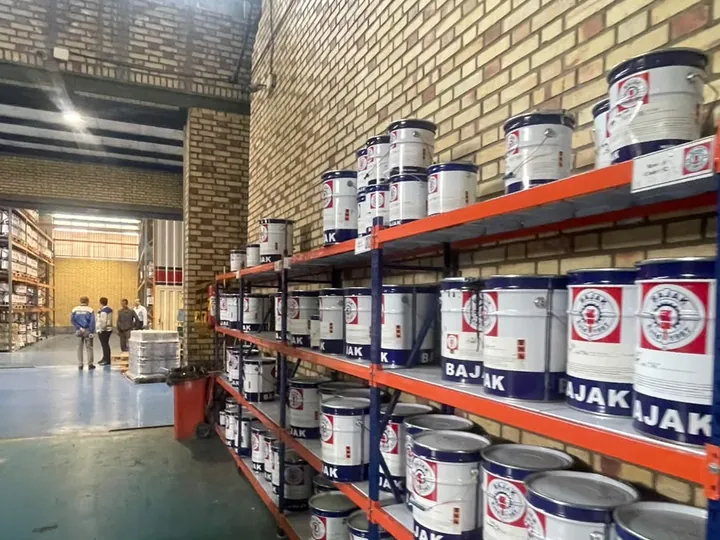
When two quotations differ widely, check the basics first: solids, film thickness and coat count. The gap is usually explained there. For the regulatory side of antifouling systems, see the IMO anti-fouling page.
Frequently Asked Questions
What affects marine paint cost per liter the most?
Resin chemistry and solids content have the biggest effect. Epoxies, polyurethanes and antifouling systems cost different amounts to make, and a higher-solids paint contains more film-forming material per liter. Special pigments, approvals, pack size and order volume then add or remove from the marine paint cost per liter.
Is the cheapest marine paint per liter the cheapest to use?
Not usually. A low marine paint price per liter often comes with low solids, so each liter covers less area. You then need more liters, more labor and sometimes more coats. Compare cost per square meter at the specified dry film thickness, not the number on the quotation line.
How do I calculate marine paint cost per square meter?
Divide the volume solids percentage multiplied by 10 by the dry film thickness in microns to get theoretical coverage in square meters per liter. Reduce it for application losses, then divide the cost per liter by that practical coverage. Multiply by the number of coats.
Why does antifouling paint cost more than a standard primer?
Antifouling contains active ingredients and controlled-release binders that must perform for a set docking interval. These materials and the testing behind them raise the cost. The antifouling also has to be renewed at each docking, so its cost is judged per year of service.
Do more coats always raise the total marine paint cost?
More coats add material and labor, but they can also lower the total cost over service life. Extra film thickness at edges, welds and splash zones delays corrosion and rework. The right number of coats is the one the system specification calls for, applied to the stated film thickness.
What should I include when asking for a marine paint quotation?
State the area in square meters, the surface condition, the required system with film thickness and the service life you expect. Add the pack sizes, delivery location and technical data sheets needed. Suppliers can then quote the same scope, which makes the quotations comparable.
Conclusion: Judge Marine Paint Cost by the Square Meter
Marine paint cost is not the number on a quotation line. It is the cost of covering, protecting and maintaining a surface for as long as the coating works. Solids, coats, application and service life all sit between the liter and the result.
Ready to compare options? Browse the Marine Paint category in our shop, or contact the Stock Sanaat team with your area, system and delivery location. We will help you work out the cost per square meter before you order.
Recent Posts